




A dining table has to do a lot more than look good.
It becomes homework central, the place where everyone gathers for dinner, a landing spot for groceries, a game-night table and, eventually, the center of holidays and family traditions.
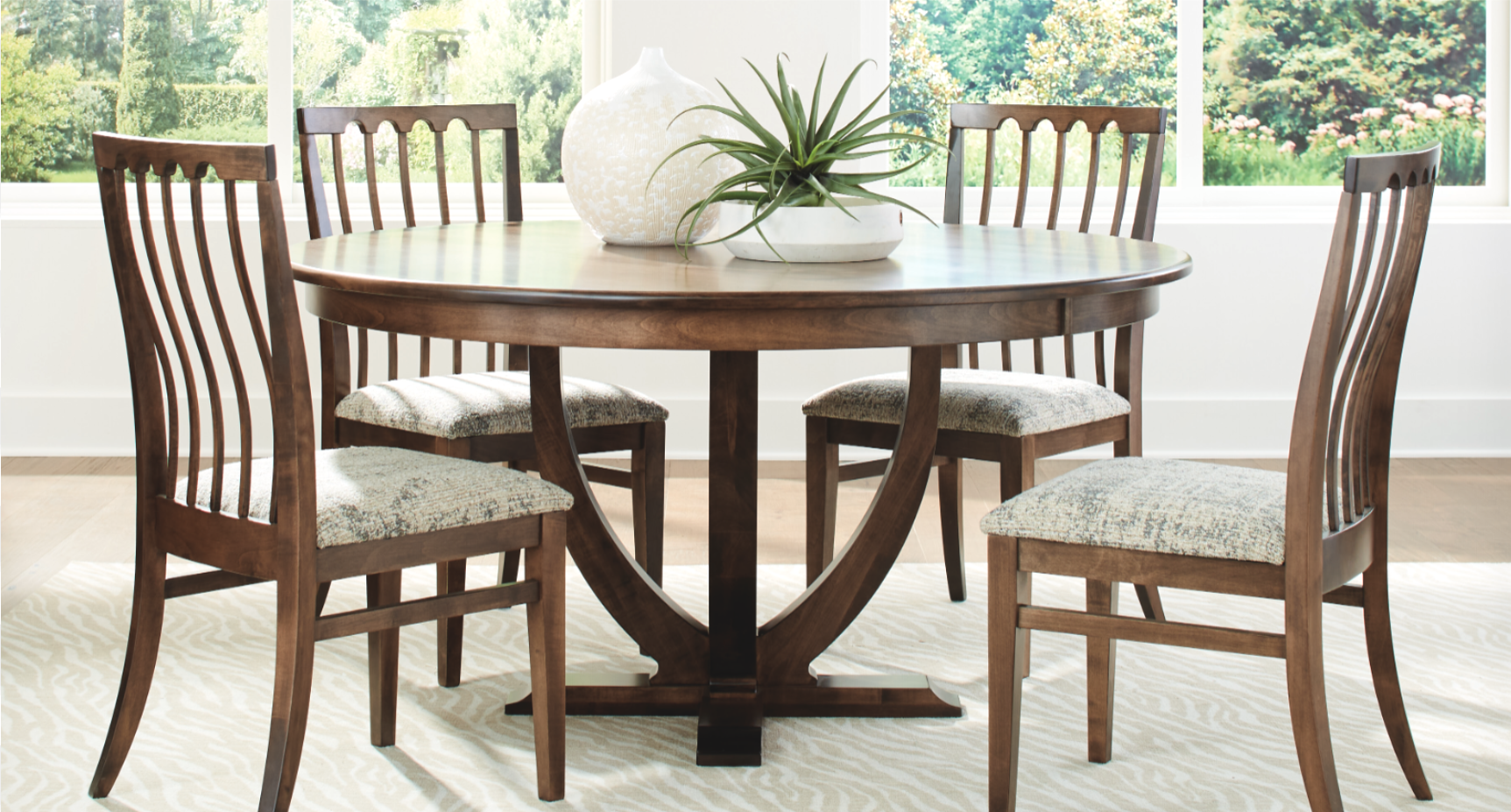
That’s one reason many Kansas City homeowners start looking at solid wood dining tables when they want something that feels substantial, personal and built for everyday life.
And if you’ve struggled to find the right size, finish or style in a standard dining set, a custom dining table can give you considerably more flexibility.
At Furniture Mall, our Home Solution Specialists help guests compare options and narrow down what works for their home, lifestyle and budget. With customizable solid wood dining furniture from brands like MAVIN, you can make choices that affect not only how your table looks, but how it fits and functions in your space.
Here’s what to know before you buy.
What Is a Custom Solid Wood Dining Table?
A custom solid wood dining table allows you to personalize several elements of the table instead of buying only the exact combination shown on a showroom floor.
Depending on the collection, customization may include:
- Wood species
- Table size
- Table shape
- Leg or pedestal style
- Stain or finish
- Edge profile
- Extension leaves
- Coordinating chairs and case pieces
That means you’re not simply choosing a dining table.
You’re creating a combination that works for your room, your style and the way your family actually uses the space.
Why Choose a Solid Wood Dining Table?
One of the biggest advantages of solid wood is that it is a natural material with its own grain, tone and character.
No two boards are exactly alike.
MAVIN explains that even the same table or chair can look and feel dramatically different depending on which wood species is used because each species has its own grain, color and texture.
That variation is part of what gives solid wood furniture its personality.
Solid wood can be especially appealing if you:
- Want a table you plan to keep for many years
- Appreciate natural wood grain and character
- Want more control over size, color or style
- Have a room that is difficult to fit with standard furniture
- Want something that feels more personal than a mass-produced table
It doesn’t mean solid wood is automatically the best choice for everyone.
If your priority is getting something immediately or keeping the upfront cost as low as possible, an in-stock table made with a combination of materials may fit your needs better.
The goal is to understand the difference and choose what works for your household.
How Customizable Are Solid Wood Dining Tables?
Customization is where solid wood furniture can become especially useful.
Instead of starting with:
“Which table do I like?”
Try starting with:
“What does my dining room need?”
Start With the Right Size
Before choosing a table, measure the room itself.
Think about:
- How many people sit there every day
- How many people you occasionally want to seat
- How much walking space you need around the table
- Whether chairs can be comfortably pulled out
- Whether nearby doorways, cabinets or walkways affect placement
A family of four that occasionally hosts eight people may not need an oversized table every day.
An extension table can give you more flexibility without making the room feel crowded the rest of the year.
Choose a Shape That Works With Your Room
The shape of the room can help guide the shape of the table.
Rectangular tables work especially well in longer dining rooms and typically make it easier to seat larger groups.
Round tables can work beautifully in square spaces and make conversation feel more intimate because everyone faces toward the center.
Oval tables can provide many of the benefits of a rectangular table while creating softer visual lines.
Square tables may be a good fit for smaller square rooms or breakfast areas.
Custom ordering gives you the opportunity to choose based on the room instead of trying to force the room to fit the furniture.
Which Wood Is Best for a Dining Table?
There isn’t one best wood for every dining table.
The right choice depends on the look you prefer, how much natural variation you like and how important surface hardness is for your household.
MAVIN offers nine wood choices for dining furniture and uses the Janka hardness scale to help explain how the species compare. The Janka rating measures the amount of pressure required to mar kiln-dried wood. A higher number indicates a harder surface.
Here are several of the wood species you may encounter while customizing your dining furniture.
Maple
Maple is one of the harder options in MAVIN’s wood lineup, with a Janka rating of 1450.
It has a fine, relatively even grain and can have a naturally light appearance. It also takes stain well, which makes it versatile across many design styles.
MAVIN notes that maple may show small closed knots and mineral streaks, and those natural features can become more noticeable after stain is applied.
Consider maple if you want: a smoother grain, versatile appearance and a harder wood surface.
White Oak
White oak has a Janka rating of 1360 and is known for strength and stability.
Its color typically ranges from light to medium brown with gray undertones, and its straight grain can work well in both traditional and more modern designs. MAVIN also notes that white oak’s tighter pore structure helps it resist wear and accept stain well.
Consider white oak if you want: a timeless, durable look with noticeable but refined grain.
Oak
Oak has a Janka rating of 1260 and one of the most recognizable wood grains.
It has long been associated with traditional furniture, but the finish and furniture style can make oak feel much more contemporary than many people expect.
Consider oak if you want: visible grain, classic character and a versatile look.
Walnut
Walnut has a Janka rating of 1010.
Its coloring can range from lighter brown to deep chocolate, sometimes with darker streaks or subtle purple tones. The grain is generally straight, although naturally wavy or curly patterns may also appear.
Consider walnut if you want: rich color, warmth and a more dramatic wood appearance.
Rustic Cherry
Rustic cherry has a Janka rating of 950 and highlights natural variations rather than trying to create a perfectly uniform appearance.
Knots, mineral streaks, pits and color changes can all become part of the finished piece. Cherry also naturally darkens over time with exposure to light and heat.
Consider rustic cherry if you want: a warm, natural look with lots of visible character.
Wormy Maple
Wormy maple, sometimes called ambrosia maple, also has a Janka rating of 950.
Its distinctive markings are created by the ambrosia beetle and can include darker streaking, color changes and tiny wormholes. MAVIN notes that no two boards look exactly alike.
Consider wormy maple if you want: a unique, organic look with a lot of natural variation.
Elm
Elm has a Janka rating of 830.
Its coloring can range from gray-white or light brown to richer red-brown and darker brown tones. The grain may be straight but is often interlocked, giving the wood more texture and movement.
Consider elm if you want: more visible grain movement and strong natural variation.
Does a Harder Wood Mean a Better Dining Table?
Not necessarily.
The Janka scale is useful for comparing surface hardness, but hardness is only one factor.
You should also consider:
- Grain pattern
- Color
- Natural variation
- Finish
- Overall style
- How you want the table to age over time
For example, maple is harder than walnut, but someone who loves the darker tone and grain of walnut may still prefer walnut for their home.
For busy households, surface hardness may be worth considering if your table doubles as a homework station, craft table or everyday gathering space.
But the best choice is usually the wood that gives you the right balance of durability and appearance.
Why Does the Same Stain Look Different on Different Woods?
Because stain doesn’t cover up the natural characteristics of the wood underneath it.
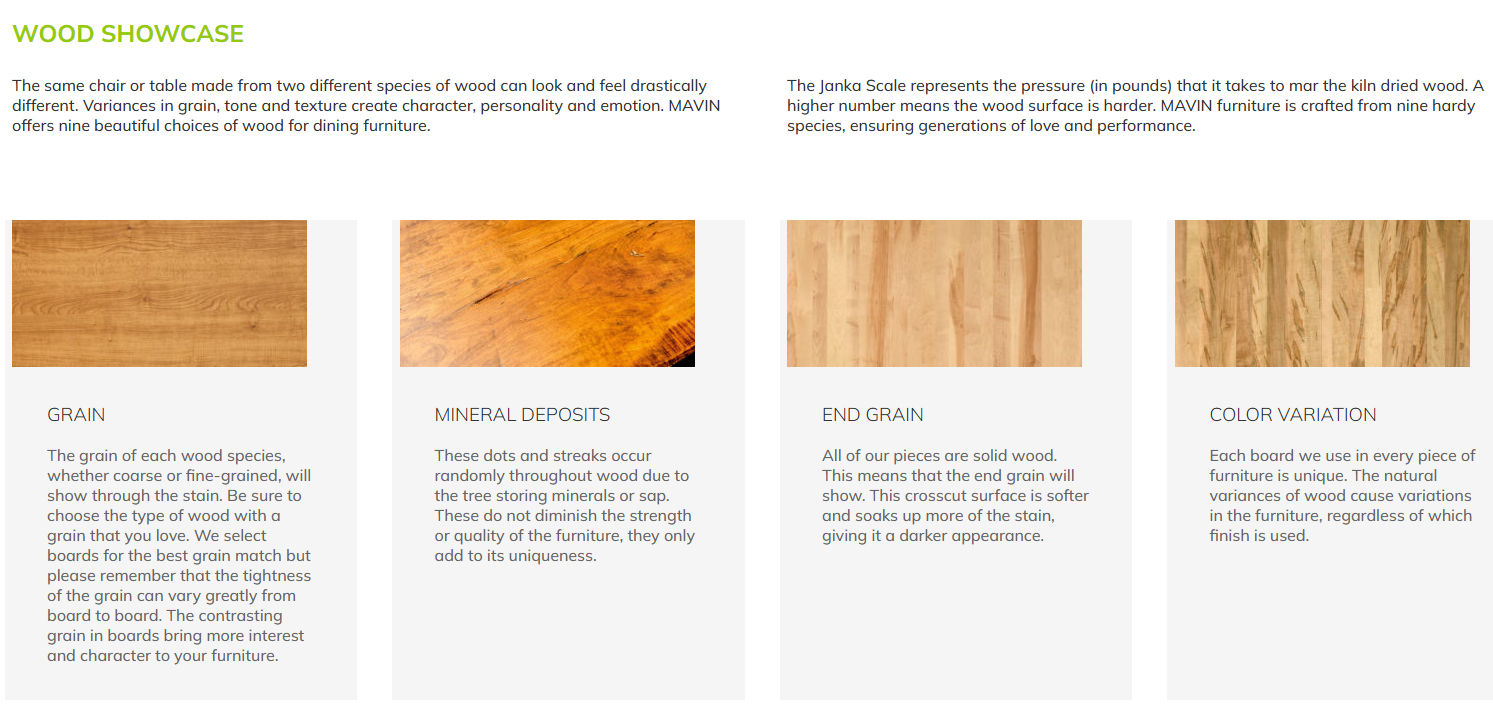
MAVIN explains that the grain of each wood species remains visible through the stain, and natural differences from board to board can affect the final appearance.
End grain can also absorb more stain than other surfaces, which may make those areas appear darker.
That’s why choosing a stain from a tiny color chip alone can be misleading.
When possible, look at the wood species and finish together before making your final decision.
Are Knots, Mineral Streaks and Color Differences Defects?
Usually, no.
Natural wood varies.
MAVIN identifies features such as mineral streaks, knots, pits and color variation as naturally occurring characteristics of wood. Mineral deposits, for example, do not reduce the strength or quality of the furniture.
These details are part of what makes each solid wood piece unique.
If you prefer a cleaner, more uniform appearance, you may want a wood species with a finer, more consistent grain.
If you like visible character, species such as rustic cherry or wormy maple may be more appealing.
Will the Color of a Solid Wood Table Change Over Time?
It can.
Wood naturally changes as it ages.
MAVIN notes that wood tends to darken over time, adding warmth and depth beneath the stain. Humidity, light, smoke, heat and steam can accelerate that change, and the effect may be more noticeable with lighter stains.
For many people, that gradual change is part of the appeal of real wood furniture.
Your table develops character along with your home.
What Finish Should You Choose?
The best finish depends on both your style and the rest of your room.
Rather than trying to perfectly match every wood tone in your home, look for colors that coordinate.
Sometimes a little contrast looks better than an almost-match.
Consider your:
- Flooring
- Kitchen cabinets
- Nearby furniture
- Wall color
- Natural light
- Overall decorating style
Also think about how much variation you want to see.
A lighter or more transparent finish may showcase more of the natural grain, while a darker finish may create a richer, more dramatic effect.
If you have kids, pets or a dining table that gets constant use, it can also be helpful to think about which finish will be most forgiving for your lifestyle.
Should You Get an Extendable Dining Table?
For many families, an extension table makes a lot of sense.
It solves a common dining-room problem:
You want enough seating for holidays and gatherings, but you don’t need a huge table every day.
Before choosing an extension table, ask:
How many people sit here most days?
How many people do we realistically want to seat when we host?
Where will we store the extra leaves?
How large will the table become when it is fully extended?
Those answers can help you determine which starting size and extension configuration will be most useful.
How Much Does a Custom Solid Wood Dining Table Cost?
There isn’t one standard price for a custom solid wood dining table.
The final cost can depend on:
- Wood species
- Table dimensions
- Base or leg design
- Finish
- Extension leaves
- Edge details
- Chairs and coordinating pieces
That’s why it’s helpful to establish your priorities before you start customizing.
For example, you may decide that getting the exact size and extension capability matters more than choosing a particular premium wood.
Someone else may care most about a specific wood species or finish.
A Home Solution Specialist can help you compare where different choices affect the price so you can decide where your budget matters most.
How Long Does a Custom Dining Table Take to Order?
Custom furniture typically takes longer than buying an in-stock dining table because the piece is being made in the combination you selected.
Lead times can vary based on:
- Manufacturer
- Materials
- Current production schedules
- Customization choices
If you need the table before a specific holiday, party or move, mention that early.
Your Specialist can help you compare custom and in-stock options based on your timeline.
Should You See a Custom Dining Table in Person Before Ordering?
Whenever possible, yes.
Seeing furniture in person can help you evaluate details that are difficult to judge online, including:
- Scale
- Wood grain
- Finish color
- Edge details
- Table height
- Chair comfort
- Overall construction
Even if the exact combination you want is not displayed, seeing representative wood samples, finishes and table styles can make the customization process much easier.
Is a Custom Solid Wood Dining Table Worth It?
It can be, especially if standard dining tables keep forcing you to compromise.
Custom may make sense when several details matter to you at the same time.
You may need a specific size.
You may want a particular wood species.
You may need extension leaves.
You may have a specific finish in mind.
And you may want a table that feels right for your home for years instead of simply filling the space today.
If those details aren’t important to you, an in-stock dining table may be a better fit.
The goal isn’t to convince everyone to buy custom furniture.
The goal is to help you choose the right table for the way you live.
Where Can I Buy a Custom Solid Wood Dining Table in the Kansas City Area?
Furniture Mall offers customizable dining furniture for Kansas City-area shoppers, including solid wood options from brands such as MAVIN.
You can visit Furniture Mall in:
Olathe, Kansas
Accross from Bass Pro Shop
2125 E Kansas City Rd.
Olathe, KS 66061
Lee’s Summit, Missouri
Located in Summit Fair Shopping Center
900 NW Blue Pkwy.
Lee’s Summit, MO 64086
Kansas City Northland
Located in Metro North Crossing
8550 N Jefferson St.
Kansas City, MO 64155
Furniture Mall also has a location in Topeka, Kansas.
Our Home Solution Specialists can help you compare table sizes, wood species, finishes, chairs and extension options so you don’t have to figure it all out on your own.
Because when you’re choosing a table your family may gather around for years, we help you get it right.
Visit one of our 4 locations or explore online at thefurnituremall.com.
Want to keep learning?
Read next: 5 Tips for Choosing your Dining Table