






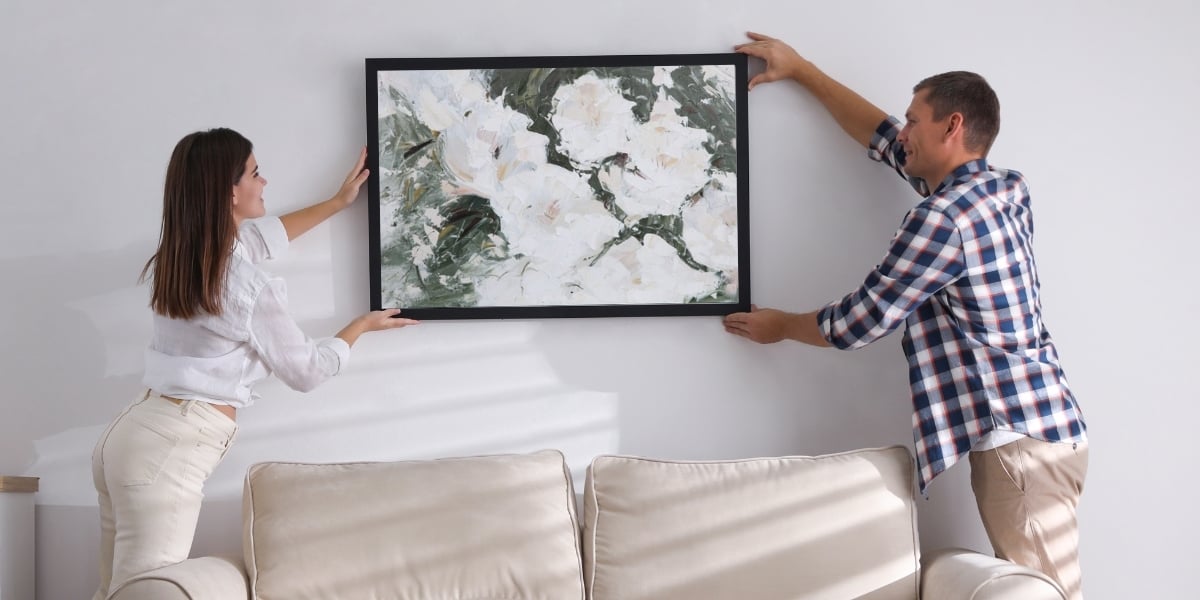
Hanging art shouldn't be this stressful. Here's how to make it simple.
You finally found a piece you love. You get it home, grab a hammer, step back, and—ugh.
Too high. Too small. Not quite right.
Hanging artwork shouldn't be this hard. But most of us were never taught how to get it right—and Pinterest inspiration doesn't exactly tell you how high to hang that canvas or how far it should be from the sofa.
At Furniture Mall, we’ve helped thousands of guests just like you bring their walls to life. And whether you're decorating your forever home or just freshening up your living room, the secret is knowing a few expert-approved rules.
Once you do? You’ll never second-guess yourself again.
📽️ Jamie, Furniture Mall Home Stylist, shares quick tips & tricks for hanging artwork
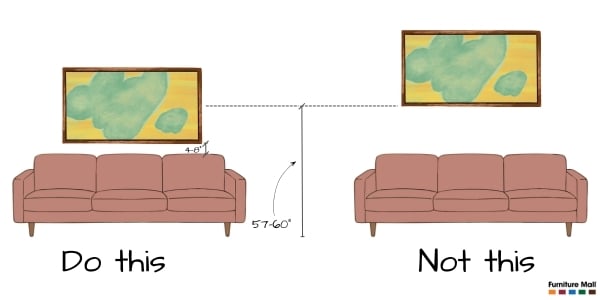
Rule #1: Hang Artwork So the Center Is 57–60 Inches From the Floor
This is the #1 mistake we see: art hung too high. The sweet spot? Eye level.
That means the center of your artwork—not the top or bottom—should be 57 to 60 inches from the floor.
This is the same rule museums and design pros use to create natural visual flow and comfort.
Exceptions to Keep in Mind
- Above furniture? Use the next rule instead.
- Gallery walls? Treat the whole grouping as one unit and center it at 57–60".
- Tall ceilings? You can raise the center slightly (up to 63")—just keep it visually grounded.
On the hunt for the perfect piece for your space? →Shop Art & Wall Decor
Rule #2: Keep It 4–8 Inches Above Furniture
When you're hanging artwork above a sofa, bed, console, or sideboard, it shouldn’t float in space.
The bottom edge of your frame should sit just 4 to 8 inches above the furniture.
- Less than 4" can feel cramped.
- More than 8" looks disconnected or like it doesn’t belong.
Pro Tip: If you’re hanging artwork above your sofa, consider one that feels purposeful and balanced. Browse comfy, stylish sofas that make a great foundation for art — whether you prefer a classic three‑seat, a cozy sectional, or a performance fabric that stands up to family life. →Shop Sofas or Shop Sectionals
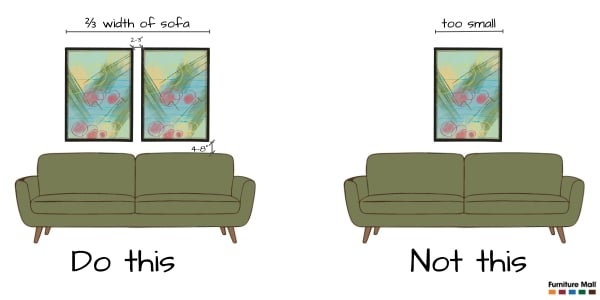
Rule #3: Make Sure Your Art Is About ⅔ the Width of the Furniture Below
This one’s about proportion.
Your art (or grouping) should span roughly two-thirds the width of the furniture it’s above.
That helps it feel balanced and intentional.
- Hanging over a 90" sofa? Your art should be around 60" wide.
- Using multiple frames? Treat them as one visual unit.
Bonus Tips That Make a Big Difference
Once you’ve nailed the core rules, these tricks make hanging feel even easier (and way more fun).
Plan It with Paper First
Trace your frames on paper, cut them out, and tape them to the wall.
Move them around until the layout feels right—then grab the hammer.
You'll feel way more confident with zero holes to patch.
Use a Level
This seems like a no-brainer, but you'd be surprised by how many people skip this part. Even if it looks straight, check it. Your eyes (and slanted floors) can trick you. A small level is a game-changer—and it fits in your kitchen drawer.
Use the Right Hardware
Match your wall type and art weight:
- Drywall: Picture hooks or anchors
- Brick or concrete: Masonry drill and anchors
- Heavy art: No Command strips—use serious anchors (nails alone will not hold heavy art).

Want a Gallery Wall? Here’s How to Nail It
Gallery walls are bold, fun, and full of personality. But without a plan, they can go from “styled” to “scattered” fast. Here’s how to get it right:
Achieve the Perfect Gallery Wall:
- Anchor with the Largest Piece: Start with your biggest frame and build outward to create a natural focal point. (center arrangement at 57-60")
- Standardize Gaps: Keep spacing identical between all frames (usually 2–3 inches) to make disparate art styles feel like a single unit.
- Mix Frame Sizes and Orientations: Alternate between landscape and portrait pieces to keep the eye moving and avoid a "gridlock" look.
- Coordinate Your Palette: Use a "common thread" color that appears in most of the art to unify the collection.
- Vary Textures: Include 3D objects, mirrors, or different frame finishes (wood, metal, matte) to add depth and prevent the wall from looking flat.
- Maintain a "Weighted" Bottom: Keep heavier, larger frames toward the bottom or center to prevent the arrangement from feeling top-heavy.
Pro Tip: Gallery walls do not have to be symmetrical or have identical frames. The key is balance.
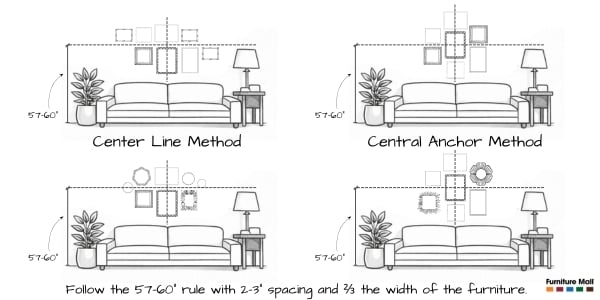
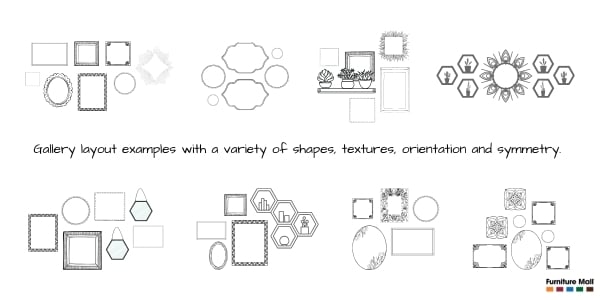
Gallery walls above an entry way or console table sets the tone for any room. Check out console tables that pair beautifully with any room. →Shop Console Tables
Quick Recap: The No-Stress Hanging Formula
✔️ Center of the artwork = 57–60" from floor
✔️ Bottom of frame = 4–8" above furniture
✔️ Width = ~⅔ the width of furniture below
✔️ Use paper, a level, the right hardware, and plan gallery walls intentionally

What’s Next? Pick the Right Art for Each Room
Now that you know how to hang it, let us help you find the art that fits the vibe and function of every room.
Whether you’re styling your dream living room or just finally getting that gallery wall off the ground, we’re here to help with smart, down-to-earth advice and Home Solutions Specialists who care.
Stop by, give us a call, or bring in photos of your space. find the right foundation for your new art wall
No pressure. Just people who are ready to help.
Visit us in-store or explore more guides at TheFurnitureMall.com.
→Download Printable Art Hanging Tips
→Download Printable Gallery Tips
Your Next Reads
-
How to Choose the Right Sofa: A Real-Life Buying Guide — find the right foundation for your new art wall .
-
Rug Size Guide: How to Choose the Perfect Rug Size for Every Room — for a pulled-together living room feel.
- Furniture Tiers Explained: Good, Better, Best & Luxury — choose furniture that fits your life and budget.